

A behavioral team is a group of specialized mental health professionals who work together to assess, plan, and coordinate care for individuals with complex behavioral health needs. Rather than seeing multiple providers separately, you benefit from a collaborative approach where clinicians share information, align treatment goals, and ensure every aspect of your mental health, addiction, or behavioral challenges is addressed in one cohesive plan.
This model of care has gained traction across Canada because it recognizes a simple truth: mental health conditions rarely exist in isolation. You might be managing depression alongside substance use, or navigating anxiety that affects your ability to work and maintain relationships. A behavioral team brings together expertise from psychiatry, psychology, social work, nursing, and sometimes addiction counseling or occupational therapy to see the full picture of what you’re experiencing.
Understanding how these teams operate can help you make informed decisions about your care or advocate for someone you support. This article breaks down who makes up a behavioral team, how collaboration actually happens in practice, where you might encounter this model, and what benefits it offers compared to traditional one-on-one treatment. Whether you’re exploring treatment options for the first time or looking for a more coordinated approach after previous attempts haven’t worked, knowing what a behavioral team can do matters.
What a Behavioral Team Means in Mental Health Care
A behavioral team in mental health care is a group of professionals from different disciplines who work together to support someone dealing with mental health or addiction challenges. Unlike seeing a single therapist or doctor on your own, you’re supported by a coordinated group where each member brings specialized expertise to address different aspects of your wellbeing, from symptoms and medications to housing, employment, and daily coping strategies.
- Behavioral Team
- A group of health professionals who collaborate to provide comprehensive mental health or addiction care, sharing information and coordinating treatment approaches for each person they support.
- Multidisciplinary Care
- Treatment that draws on multiple professional disciplines, such as psychology, psychiatry, social work, and occupational therapy, to address the full range of a person’s needs.
- Integrated Treatment
- An approach where all aspects of care are woven together into a unified plan, rather than treating mental health, addiction, housing, or other challenges as separate issues.
- Collaborative Practice
- A way of working where professionals regularly communicate, share decision-making, and adjust their approaches based on input from the whole team and the person receiving care.
In Canada, behavioral teams typically include psychologists or psychotherapists who provide talk therapy, psychiatrists who manage medications and complex diagnoses, counselors specializing in addiction or specific mental health issues, social workers who connect people to community resources and advocate for practical needs, occupational therapists who help rebuild daily living skills, and increasingly, peer support workers with their own lived experience of recovery. What sets these mental health teams apart is the intentional coordination: they meet regularly to discuss your progress, adjust your care plan together, and ensure nothing falls through the cracks. This collaborative approach reflects a growing recognition across Canadian provinces that complex mental health and addiction challenges require more than one perspective or skill set to address effectively.
How Behavioral Teams Work Together

Behavioral teams function through structured collaboration designed to ensure every member stays informed and aligned on a person’s care. Rather than working in isolation, team members communicate regularly and share responsibility for treatment outcomes, creating a safety net that catches issues early and adapts quickly to changing needs.
The foundation of this coordination is regular case conferences, scheduled meetings where the team reviews each person’s progress, discusses challenges, and adjusts treatment plans as needed. In these sessions, a psychiatrist might share medication observations while a social worker reports on housing stability and a counselor discusses therapy breakthroughs. This cross-pollination of perspectives helps the team see the whole person, not just isolated symptoms or problems.
Information sharing happens within strict privacy frameworks. In Canada, teams operate under provincial health information protection laws (like PHIPA in Ontario or PIPA in Alberta), meaning your consent is required before details are shared among team members. Once you’ve agreed, professionals use secure electronic health records or encrypted communication platforms to document assessments, treatment notes, and care plans that all relevant team members can access. This prevents you from repeating your story to every new provider and reduces dangerous gaps where critical information might fall through the cracks.
Key processes that keep behavioral teams synchronized include:
- Shared initial assessments that pool observations from multiple professionals at intake
- Joint goal-setting sessions where you and the team define treatment priorities together
- Scheduled team meetings (weekly, biweekly, or monthly depending on program intensity) to review cases
- Cross-referrals when one team member identifies a need that another specialist can address
- Integrated documentation systems that create a unified care record accessible to all team members
Most behavioral teams designate a care coordinator or primary contact person, often a case manager or lead therapist, who acts as your main point of connection. This person tracks your overall progress, schedules appointments, helps you navigate the team’s services, and ensures nothing falls through administrative cracks. If a crisis emerges or your needs shift, the coordinator mobilizes the appropriate team members quickly rather than leaving you to figure out who to call. This leadership role doesn’t diminish other members’ expertise; it simply creates clear accountability and streamlines communication so the team functions as a cohesive unit rather than a collection of individual appointments.
Core Components of Behavioral Team Expertise
Clinical and Therapeutic Specialists
Clinical and therapeutic specialists form the treatment core of behavioral teams. These professionals work directly with you to address mental health symptoms, develop coping strategies, and support recovery.
Psychologists conduct detailed assessments to understand your challenges and deliver evidence-based therapies like cognitive-behavioral therapy (CBT) or trauma-focused approaches. They help you build skills to manage anxiety, depression, PTSD, and other conditions without prescribing medication.
Psychiatrists are medical doctors who diagnose mental health disorders and manage medications when needed. They monitor how treatments affect you, adjust prescriptions, and collaborate with other team members to balance medication with therapy and support.
Psychotherapists and counselors provide regular talk therapy sessions tailored to your needs. They create safe spaces to explore difficult emotions, process experiences, and work toward your personal goals. Some specialize in specific approaches like dialectical behavior therapy or family therapy.
These specialists meet regularly to discuss your progress, ensuring everyone understands your treatment direction. If your psychologist notices patterns that suggest medication might help, they consult with the psychiatrist. If medication side effects emerge, your psychiatrist coordinates with your therapist to adjust both approaches together. This coordination prevents conflicting advice and keeps your care moving forward.
Support and Rehabilitation Professionals
Social workers anchor the practical side of behavioral team care. They connect people to housing support, income assistance, disability benefits, and family services, resources that stabilize daily life while treatment addresses symptoms. A social worker might help someone navigate Ontario Disability Support Program applications or arrange supervised visits with children, removing barriers that otherwise derail recovery.
Occupational therapists focus on rebuilding functional skills. They work with individuals who’ve lost confidence in routine tasks due to depression, anxiety, or prolonged substance use. An OT might design a graduated plan for returning to work, teach time management strategies, or adapt a home environment to reduce sensory overload for someone with PTSD.
Addiction counselors bring specialized knowledge of substance use patterns, triggers, and relapse prevention. They provide individual and group counseling tailored to the realities of withdrawal, cravings, and the lifestyle changes sobriety demands.
Case managers tie it all together. They track appointments, follow up when someone misses sessions, coordinate between team members, and ensure care plans stay relevant as circumstances shift. In rural or remote Canadian communities, case managers often serve as the primary point of contact, bridging distances between specialists.
These professionals don’t just treat illness, they rebuild the practical foundation recovery requires.
Peer Support and Lived Experience
Peer support workers bring a dimension to behavioral teams that professional training alone cannot replicate: the lived experience of facing mental health or addiction challenges and finding a path forward. These team members have walked similar roads to the people they support, and that shared understanding creates a unique form of connection and credibility.
Unlike clinical staff who rely on academic knowledge and professional observation, peer supporters draw from personal recovery journeys. They can say “I’ve been there” and genuinely mean it, which often opens conversations that might otherwise feel guarded or one-sided. This authenticity helps normalize the recovery process and offers tangible proof that improvement is possible.
Peer support workers contribute practical insights that emerge from real-world experience rather than textbooks. They share coping strategies they’ve actually used, identify resources they’ve personally navigated, and recognize obstacles they’ve overcome themselves. This ground-level perspective complements clinical expertise by filling gaps in treatment plans and addressing day-to-day challenges that formal therapy sessions might miss.
In Canadian behavioral teams, peer support roles are increasingly recognized as essential rather than supplementary. They bridge the gap between professional care and everyday life, offering hope rooted in lived reality rather than clinical theory.
When and How Behavioral Teams Are Used
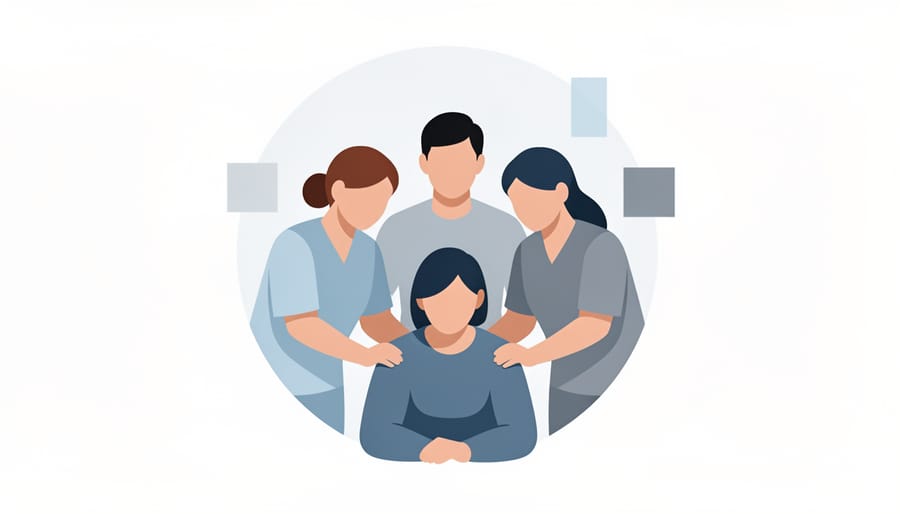
Behavioral teams operate across a wide range of mental health and addiction services in Canada. You’ll find them in community mental health centers, where they provide ongoing outpatient support for people managing chronic conditions or recovering from acute episodes. Hospital-based psychiatric units and partial hospitalization programs rely on teams to deliver intensive treatment while coordinating discharge planning and community connections. Addiction treatment facilities, both residential and outpatient, use behavioral teams to address the complex medical, psychological, and social dimensions of substance use disorders.
Crisis response teams deploy behavioral expertise in urgent situations, bringing together mental health nurses, crisis workers, and sometimes police to respond to individuals in acute distress. Early intervention programs for youth and young adults often anchor their services around team-based care, recognizing that catching problems early requires coordinated assessment, family support, and timely access to specialists. Some primary care practices now integrate behavioral health professionals directly into family medicine clinics, making team-based mental health support part of routine medical care.
Common settings where you might encounter behavioral teams include:
- Community mental health clinics offering counseling, psychiatric care, and case management
- Residential treatment programs for addiction or eating disorders
- Mobile crisis teams responding to mental health emergencies
- Concurrent disorder programs treating mental health and substance use together
- Youth mental health hubs like those following the Foundry model
- Indigenous wellness teams blending traditional healing with clinical care
Team-based care makes the most difference for people facing complex challenges. If you’re dealing with co-occurring mental health and substance use disorders, the coordinated approach helps ensure both conditions get attention rather than falling through the cracks. People with severe or persistent mental illness benefit from the stability and continuity teams provide. Those navigating multiple life stressors, housing insecurity, family conflict, chronic health problems, often find that what works best is having professionals who communicate with each other and address needs holistically rather than in isolation.
Benefits of Team-Based Behavioral Care

Team-based behavioral care delivers measurable advantages that go far beyond convenience. When multiple professionals collaborate on your treatment, you benefit from a fuller picture of your strengths, challenges, and needs. A psychologist might identify cognitive patterns, while a social worker addresses housing instability and an occupational therapist helps you return to work, all within a unified plan rather than fragmented appointments.
This coordination reduces the risk of conflicting advice or overlooked issues. In traditional care, you might see three providers who never speak to each other, leaving you to reconcile different recommendations on your own. Behavioral teams hold regular case meetings to align their approaches, adjust treatment as your situation evolves, and catch warning signs early. The result is fewer gaps, faster responses when you’re struggling, and a safety net that adapts with you.
Research from Canadian mental health programs consistently shows improved recovery rates and satisfaction among people receiving team-based care compared to single-provider models. Teams are particularly effective for complex situations, co-occurring mental health and substance use disorders, trauma histories, or when mental health issues intersect with employment, housing, or family concerns. You also gain built-in continuity: if one team member is unavailable, another familiar with your case can step in without starting from scratch. This collaborative structure creates accountability for providers and reassurance for you, knowing your care isn’t resting on one person’s shoulders alone.
Common Questions About Behavioral Teams
People considering behavioral team care often have practical questions about how it works. Here are answers to some of the most common concerns.
How do I access a behavioral team?
Most people are referred by their family doctor, a walk-in clinic, or a hospital. You can also contact community mental health centers directly or call your provincial health line to get help in Canada.
Will I see all team members?
Not necessarily. Your care coordinator will determine which team members you need based on your situation. You might meet regularly with two or three professionals while others consult behind the scenes.
How is my privacy protected?
Team members share information only within the team and only what’s necessary for your care, following strict privacy laws. You’ll be asked to sign consent forms, and you have the right to know what’s being shared.
What if team members disagree about my treatment?
Teams discuss different perspectives during case conferences and work toward consensus. If disagreements arise, your primary clinician or team lead facilitates the conversation, and your preferences remain central to the final plan.
Are behavioral teams covered by provincial health plans?
Public programs through hospitals and community health centers are typically covered. Private team services or specific therapies may involve out-of-pocket costs, though some employers offer extended health benefits that help.
These team-based approaches are designed to reduce confusion and make your care easier to navigate. If something about the team process doesn’t feel right, speak up. Your care coordinator can address concerns and adjust how the team works with you.
When you’re navigating mental health or addiction challenges, having a team of professionals working together on your behalf can make all the difference. Behavioral teams bring diverse expertise under one coordinated approach, ensuring you receive care that addresses your whole situation, not just isolated symptoms. This collaborative model reduces the risk of fragmented treatment, speeds up response times during crises, and creates a stronger support network throughout your recovery.
If you’re seeking mental health or addiction support in Canada, don’t hesitate to ask your healthcare provider whether team-based care is available. Many community health centers, hospitals, and addiction services across the country offer this coordinated approach. Understanding your options, including your rights (CTO) and available services, empowers you to make informed decisions about your care.
Recovery isn’t a straight path, and you don’t have to walk it alone. A well-coordinated behavioral team can provide the comprehensive, personalized support that helps turn hope into lasting progress.