

Mental health stigma is the collection of negative attitudes, beliefs, and stereotypes that society holds about people living with mental health conditions. It’s the reason someone might hide their anxiety medication, why a teenager avoids telling friends about therapy appointments, or why a colleague stays silent about their depression at work. In Canada, this stigma remains one of the most significant barriers preventing people from seeking help, even though one in five Canadians experiences a mental health problem or illness in any given year.
Stigma shows up in two main forms. Public stigma involves the prejudiced attitudes and discriminating behavior directed at people with mental health conditions by the general population. Self-stigma occurs when individuals internalize these negative beliefs, leading to shame, reduced self-esteem, and reluctance to pursue treatment. Both types create real, measurable harm.
The consequences extend far beyond hurt feelings. Stigma delays treatment-seeking by an average of eight to ten years, worsens symptoms, reduces quality of life, and increases isolation. People facing stigma are less likely to stick with treatment, more likely to experience discrimination in housing and employment, and often struggle with relationships that could otherwise provide crucial support.
Understanding where stigma comes from matters because it shows us how to fight it. Media portrayals that link mental illness with violence, lack of education about the biological basis of mental health conditions, and cultural beliefs that frame mental illness as personal weakness all fuel stigmatization. Historical practices like institutionalization have left lasting negative associations that persist today.
But there’s genuine reason for hope. Canada has made significant strides through initiatives like Mental Health Commission of Canada’s Opening Minds program, workplace mental health frameworks, and increased public education campaigns. Change happens when we replace myths with facts, person-centered language with humanizing conversation, and silence with shared stories of recovery.
Understanding Mental Health Stigma: The Basics
The Three Faces of Stigma
Mental health stigma isn’t one-size-fits-all. It shows up in different forms, each creating unique barriers to support and recovery. Understanding the three types of stigma helps us recognize how deeply this problem runs through our society, our systems, and even our own minds.
- Public Stigma
- The negative attitudes and stereotypes that society holds toward people with mental health conditions. This includes assumptions that someone is dangerous, weak, or incompetent because of their diagnosis.
- Self-Stigma
- The internalized shame and negative beliefs people develop about themselves after absorbing society’s prejudices. This leads to diminished self-worth and reluctance to seek help.
- Structural Stigma
- Systemic discrimination embedded in policies, institutions, and resource allocation that creates barriers to care and opportunity for people with mental health conditions.
Public stigma is what most of us think of first. It’s the coworker who assumes someone with depression can’t handle stress, or the neighbour who crosses the street to avoid someone they know has a mental health condition. In Canadian workplaces, this might look like a manager passing over a qualified candidate because their resume shows a gap they suspect was due to mental health treatment. It’s the whispered conversations at family gatherings about a relative who “just can’t get it together.”
Self-stigma cuts even deeper. After years of hearing that mental illness means weakness or failure, people start believing it about themselves. A university student with anxiety might think, “I’m broken, not like everyone else,” and skip counselling services even though they’re struggling. This internalized shame is a major reason why 60% of people with mental health conditions won’t seek help, fearing the label that comes with a diagnosis.
Structural stigma operates at the system level, often invisible until you bump against it. In Canada, this shows up in insurance policies that cap mental health coverage far below physical health benefits, or in provincial healthcare systems where wait times for psychiatric care stretch months while emergency surgeries happen within days. It’s embedded in workplace policies that offer unlimited sick days for physical illness but scrutinize mental health leaves, and in rental applications that ask about psychiatric history in ways that would be illegal for physical conditions.
Each type feeds the others, creating a cycle that’s tough to break without addressing all three levels at once.
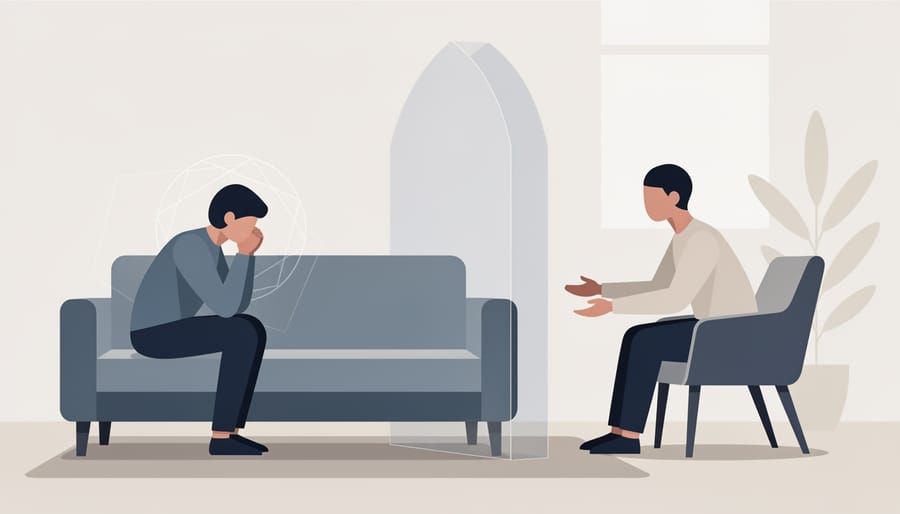
How Stigma Shows Up in Real Life
Stigma doesn’t exist only in abstract attitudes. It shows up in comments at the dinner table, in hesitant glances from coworkers, and in decisions that shape people’s lives. Here’s what it actually looks like when stigma moves from concept to everyday reality.
At work, stigma appears in hushed conversations when someone returns from stress leave. A colleague might say they’re “worried about reliability” when a team member discloses anxiety, even though that person has never missed a deadline. Managers sometimes pass over qualified candidates for promotion after learning they’ve received mental health treatment. These aren’t always conscious decisions, but they carry real consequences for careers and financial stability.
Healthcare settings should be safe spaces, yet stigma surfaces there too. Some people report doctors dismissing physical symptoms as anxiety without proper investigation. Others encounter long wait times for mental health services that would seem unacceptable for physical conditions. Emergency room staff might treat someone experiencing a mental health crisis differently than someone with a broken bone, using different tones, offering less privacy, showing less patience.
Families struggle with stigma in particularly painful ways. Parents might refuse to acknowledge a child’s depression, calling it a phase or weakness. Adult children sometimes hide their therapy appointments from aging parents who grew up when mental illness wasn’t discussed. The silence can turn a home as a barrier rather than a source of support, especially when judgmental comments or minimizing language create an environment where someone can’t be honest about their struggles.
Social circles reveal stigma through subtle shifts. Friends might stop inviting someone to gatherings after learning about their mental health condition, assuming they wouldn’t want to come or wouldn’t be fun anymore. People change the subject quickly when mental health comes up, treating it differently than they would a diabetes diagnosis or cancer treatment. The person experiencing a mental health condition picks up on these signals, learning which parts of themselves to hide to maintain relationships.
These everyday moments accumulate. Each one reinforces the message that mental health conditions are somehow different, shameful, or best kept hidden. That’s how stigma maintains its grip, one interaction at a time.
The Real Cost: Why Stigma Matters
When stigma surrounds mental health, the consequences ripple far beyond uncomfortable conversations or awkward social moments. The barriers it creates have measurable, serious impacts on individual wellbeing, recovery prospects, and the broader healthcare system.
The most devastating effect is delayed or avoided treatment. A staggering 60% of people with a mental health problem or illness won’t seek help for fear of being labelled. This means that more than half of Canadians who could benefit from support choose silence instead, often waiting until their condition becomes severe or reaches crisis point before reaching out. By that stage, symptoms have typically worsened, making recovery longer and more complex than it needed to be.
Untreated mental health conditions don’t stay static. Depression deepens, anxiety intensifies, and without intervention, people develop coping mechanisms that may worsen their situation rather than improve it. The person struggling often withdraws from social connections, leading to isolation that compounds the original problem. Relationships suffer, job performance declines, and the quality of life deteriorates in ways that touch every aspect of daily living, including the impact on family and close relationships.
Self-stigma adds another layer of harm. When someone internalizes negative beliefs about mental health conditions, they may feel ashamed, blame themselves for their struggles, or believe they’re fundamentally flawed. This internalized shame erodes self-esteem and hope, making it harder to take the first step toward recovery even when help is available.
The costs extend beyond the individual. Healthcare systems face higher expenses when people arrive in crisis rather than seeking early intervention. Workplaces lose productivity and talented employees. Communities miss out on the full participation and contributions of people who remain stuck in untreated conditions.
Perhaps most tragically, stigma obscures a fundamental truth: mental health conditions are treatable, and recovery is real. When fear of judgement keeps someone from accessing evidence-based care, stigma doesn’t just delay healing. It actively prevents it, turning a manageable health challenge into a prolonged struggle that affects every corner of a person’s life.

Where Does Mental Health Stigma Come From?
Stigma doesn’t emerge from nowhere. It’s learned through a tangle of cultural messages, institutional practices, and deeply rooted fears that have been passed down across generations.
Lack of education sits at the heart of the problem. When people don’t understand how mental health conditions actually work, they fill the knowledge gap with assumptions. They might believe depression is just sadness you can snap out of, or that schizophrenia always means violence. These misconceptions spread through families, schools, and communities, creating a foundation of misunderstanding that fuels stigma.
Media portrayals have historically done tremendous damage. News coverage often links mental illness to crime or danger, while movies and TV shows use outdated stereotypes for drama or comic relief. The person experiencing psychosis becomes the villain. The character with obsessive-compulsive disorder becomes the punchline. These representations shape public perception more powerfully than most people realize.
Cultural beliefs add another layer. Some communities view mental health struggles as personal weakness, moral failing, or family shame rather than medical conditions. In certain cultures, the expectation to appear strong and self-sufficient makes admitting you’re struggling feel like letting everyone down. These beliefs aren’t universal, but where they exist, they create intense barriers to seeking help.
Fear of the unknown plays a role too. Mental health conditions can seem unpredictable or frightening to people who haven’t experienced them or learned about them. This fear translates into avoidance and discrimination.
The historical context matters as well. Canada’s past treatment of people with mental illness, including institutionalization and forced treatments, created lasting associations between mental health and danger or otherness.
Here’s what matters most: because stigma is learned, it can be unlearned. Every root cause identified here represents an opportunity for change through education, honest conversation, and exposure to accurate information.

Fighting Back: Canada’s Response to Stigma
Canada isn’t sitting idle while stigma keeps people from getting help. Across the country, organizations and communities are launching programs that actually change minds and save lives.
The Mental Health Commission of Canada leads this charge with a comprehensive strategy calling on people in every setting to promote mental health and reduce stigma. Their work isn’t just about awareness campaigns, it’s about equipping Canadians with practical tools to shift attitudes and behaviours where it matters most.
Opening Minds stands as one of the country’s most impactful anti-stigma initiatives. This training program works directly with groups that frequently interact with people experiencing mental health challenges: healthcare providers, first responders, employers, and educators. The goal? Change how these gatekeepers think, talk, and act. The numbers tell the story, as of 2022, nearly 1 million participants have completed the training. That’s close to a million Canadians now equipped to recognize their own biases and respond with compassion instead of judgment.
Mental Health First Aid tackles a different but equally critical gap. Most of us know basic first aid for physical injuries, but freeze when someone’s struggling mentally. This program changes that reality by teaching people the skills to confidently support someone in a mental health crisis until professional help arrives. You learn to recognize warning signs, approach conversations without judgment, and connect people to appropriate resources. It’s democratizing mental health support, putting life-saving knowledge in the hands of ordinary Canadians.
In workplaces specifically, The Working Mind training addresses stigma where many spend most of their waking hours. The program trains both managers and employees to reduce workplace stigma while building resilience. It includes a practical 4-colour continuum that lets people quickly self-check their mental state and recognize when they or colleagues might need support. When your boss and coworkers understand mental health, admitting you’re struggling becomes less terrifying.
These aren’t token gestures. They’re systematic efforts to rewire how an entire nation thinks about mental illness. Every person trained becomes a point of change in their workplace, family, and community. When stigma decreases, help-seeking increases, and that’s exactly what Canada needs.

What You Can Do: Practical Steps to Challenge Stigma
You have more power to fight stigma than you might think. Change doesn’t require a platform or credential, it starts with the choices you make every day.
Your words shape how others see mental health. Swap “crazy” or “psycho” for accurate descriptions. Instead of calling someone bipolar as shorthand for moody, say they’re having a rough day. Replace “committed suicide” with “died by suicide”, it removes the criminal connotation. These shifts seem small, but language creates the reality we live in.
When someone shares their mental health struggle with you, your response matters enormously. Listen without judgment. Resist the urge to fix, compare, or minimize what they’re experiencing. Talking to a loved one about mental health or addiction takes courage on their part, match it with genuine presence on yours.
Here are concrete steps you can take starting today:
- Educate yourself through credible Canadian sources like the Mental Health Commission of Canada, rather than relying on dramatic media portrayals.
- Challenge stigmatizing comments when you hear them, even casually, “Actually, schizophrenia doesn’t mean split personality” goes a long way.
- Share your own mental health experiences when you feel safe doing so, normalizing these conversations in your circles.
- Support businesses and organizations that prioritize mental health and hire people with lived experience.
- Contact your MP about policies that address structural stigma in healthcare, housing, and employment.
If you’re supporting someone with mental health challenges or addiction, remember that taking care of yourself isn’t selfish, it’s essential. You can’t pour from an empty cup. Learn to set healthy boundaries that protect both your wellbeing and theirs.
Consider formal training. The Mental Health Commission of Canada offers programs like Opening Minds and Mental Health First Aid that have equipped nearly 1 million Canadians with practical skills to reduce discrimination. The Working Mind specifically addresses workplace stigma, giving you tools to create change where you spend most of your waking hours.
Your advocacy doesn’t need to be loud to be effective. Sometimes the most powerful anti-stigma work happens in quiet moments, believing someone’s pain is real, treating their condition as you would diabetes, remembering that recovery is possible.
Mental health stigma isn’t fixed or permanent. It’s a learned barrier, shaped by misinformation, outdated beliefs, and fear. That means it can be unlearned. Across Canada, that work is already happening. From Opening Minds training reaching nearly a million people to workplace programs like The Working Mind changing how we talk about mental health on the job, real progress is being made. Communities, workplaces, and healthcare settings are shifting away from judgment and toward understanding.
The statistic that 60% of people with mental health conditions won’t seek help because they fear being labelled isn’t just a number. It represents real people who are suffering quietly, convinced that asking for support will cost them their reputation, relationships, or livelihood. But here’s what matters: recovery is real, and it happens every day. Treatment works. Support helps. You don’t have to carry this alone.
If you’re struggling, know that seeking help is an act of courage, not weakness. The stigma you fear might feel overwhelming, but on the other side of that fear is genuine support and the possibility of feeling better. Call a crisis line, talk to your doctor, reach out to a trusted friend. Start somewhere.
As more Canadians challenge stigma in their own lives and communities, that 60% will drop. Change begins with each person who refuses to stay silent, who chooses understanding over judgment, and who reaches for help despite the fear. You can be part of that change.