

Generalized anxiety disorder is a mental health condition where you feel excessive worry about everyday situations, work deadlines, family health, financial security, or even minor schedule changes, that happens more days than not for at least six months and interferes with your ability to function at home, work, or school. Unlike the occasional stress we all experience, GAD creates a constant feeling of being overwhelmed, a persistent fear that something will go wrong, and a level of worry that feels impossible to manage or turn off.
If you’ve ever felt trapped in a loop of “what if” thoughts that won’t quiet down, or noticed your heart racing over decisions that others seem to handle with ease, you’re not alone. Generalized anxiety disorder is one of the most common mental health conditions in Canada, yet many people live with it for years before recognizing that what they’re experiencing has a name and, more importantly, effective treatment options.
Understanding what GAD actually is, how it shows up in the body and mind, what separates everyday worry from a diagnosable condition, and how clinicians identify it, is the first step toward getting the right support. This article breaks down the clinical criteria used to diagnose generalized anxiety disorder, explains the physiological mechanisms that keep anxiety running in the background, explores the patterns and symptoms that define the condition, and outlines the evidence-based treatments that help people regain control. Whether you’re researching for yourself or trying to understand what someone close to you is going through, you’ll find clear, expert-backed information grounded in Canadian clinical practice guidelines and the latest research on anxiety disorders.
What Generalized Anxiety Disorder Means

Generalized anxiety disorder goes beyond the typical stress we all experience from time to time. Where most people worry about a job interview, an upcoming bill, or a family member’s health and then move on, GAD turns everyday concerns into persistent, consuming fears that feel impossible to shut off. The worry isn’t tied to a single event, it spreads across multiple areas of life, from finances and work performance to relationships and health, often without a clear trigger or proportionate cause.
What sets GAD apart is its relentlessness. The excessive worry occurs more days than not for at least six months, creating a constant background hum of anxiety that colours how you experience daily life. You might find yourself anticipating disaster in ordinary situations: convinced you’ll lose your job over a minor mistake, certain a headache signals serious illness, or unable to stop replaying conversations and imagining the worst possible outcomes. This isn’t a choice or a personality flaw, it’s a mental health condition where the brain’s worry mechanisms have become overactive and difficult to control.
The constant feeling of being overwhelmed and on edge isn’t just mentally exhausting. GAD creates genuine interference with daily activities, making it harder to concentrate at work, maintain relationships, or simply get through routine tasks without the weight of fear and apprehension. You’re not overreacting, you’re experiencing a recognized condition that affects how your mind processes uncertainty and manages worry, and that difference matters when it comes to finding the right support.
How Generalized Anxiety Disorder Works in the Body and Mind
The Worry Cycle

Worry in GAD operates like a loop that feeds itself. You worry about a situation, which triggers anxiety. That anxiety feels uncomfortable, so your mind searches for ways to reduce it, often by worrying more in an attempt to “solve” the problem or prepare for every possible outcome. This effort to control uncertainty through worry actually reinforces the pattern, teaching your brain that worry is necessary and protective.
Over time, this cycle becomes automatic. Your mind starts treating everyday situations as threats that require constant mental rehearsal. You might worry about a work deadline, then worry about whether you’re worrying too much, then worry about the physical tension the worry is causing. Each loop strengthens the habit, making it harder to recognize when worry is excessive or to simply let a thought pass without engaging it.
The cycle interferes with normal thought patterns because your mind becomes trained to default to worst-case scenarios. Instead of processing information neutrally or moving on after briefly considering a concern, you get stuck in repetitive “what if” thinking that crowds out other mental processes and prevents you from fully concentrating on the present moment.
Impact on Daily Functioning
The real-world impact of GAD extends far beyond feeling anxious. When excessive worry more days than not becomes the norm, it creates tangible barriers across every area of life. At home, you might find it difficult to relax or enjoy time with family because your mind constantly races through worst-case scenarios. Simple decisions, like planning meals or organizing household tasks, can feel overwhelming when every choice triggers another spiral of worry.
Work and school performance often suffer as concentration becomes nearly impossible. You may struggle to meet deadlines, not because you lack skills, but because chronic anxiety drains your mental energy and makes it hard to focus on tasks at hand. Colleagues or classmates might notice you seem distracted or tired, though they can’t see the constant internal battle you’re fighting. Workplace responsibilities pile up when worry about making mistakes or facing criticism keeps you second-guessing your work.
Social situations and relationships take a hit too. You might avoid gatherings or cancel plans because the anxiety feels too intense, or you may participate but struggle to be present. This interference with daily activities is not a character flaw, it’s a core feature of how GAD disrupts normal functioning, making everyday life feel like an exhausting obstacle course.
Recognizing the Signs and Symptoms
Emotional and Mental Symptoms
The psychological burden of GAD centers on excessive worry that feels impossible to switch off. This worry isn’t brief or occasional, it dominates your thoughts more days than not, cycling through concerns about work, health, relationships, finances, and everyday responsibilities. What sets GAD apart is the persistent feeling that something will go wrong, even when there’s no clear reason to expect it.
People with GAD often describe their worry as uncontrollable. You recognize the anxiety is disproportionate to the actual situation, yet you can’t stop your mind from returning to worst-case scenarios. This creates a frustrating loop: you worry, then you worry about worrying, which intensifies the overall sense of being trapped in your own thoughts.
The mental experience includes difficulty concentrating because anxious thoughts intrude constantly. You might find yourself unable to complete tasks at work or follow conversations because your mind keeps jumping to potential problems. Decision-making becomes exhausting, even small choices feel overwhelming when every option carries the weight of imagined consequences.
Many people report feeling constantly on edge or keyed up, as though waiting for bad news. This mental restlessness makes it hard to relax or enjoy activities that once brought pleasure. Sleep often suffers because your mind won’t quiet down at night, rehearsing worries or anticipating tomorrow’s challenges. Over time, this relentless mental strain leads to irritability, emotional exhaustion, and a pervasive sense of dread that colors daily life.
Physical Symptoms

Generalized anxiety disorder doesn’t just live in your thoughts. The constant worry and fear create real, measurable changes in your body that you can feel throughout the day. Many people with GAD first notice something is wrong because of these physical symptoms, not the worry itself.
Muscle tension is one of the most common bodily signs. Your shoulders might feel permanently tight, your jaw clenched, or your neck stiff. This tension often persists even when you’re trying to relax, and it can lead to headaches or body aches that won’t ease.
Sleep disturbances accompany the excessive worry. You might struggle to fall asleep because your mind races through concerns, wake frequently during the night, or feel exhausted even after a full night in bed. The anxiety interferes with restorative sleep, creating a cycle where fatigue makes worry harder to manage.
Digestive problems are also frequent. Persistent anxiety can cause stomach aches, nausea, or changes in appetite and digestion. Your gut responds directly to the constant state of stress your body maintains.
Other physical symptoms include restlessness, feeling keyed up or on edge, difficulty concentrating, irritability, and fatigue that doesn’t improve with rest. Some people experience trembling, sweating, rapid heartbeat, or shortness of breath. These aren’t separate conditions, they’re direct manifestations of how anxiety affects your nervous system and bodily functions when worry becomes excessive and uncontrollable.
Types of Worry and Anxiety Patterns in GAD
Generalized anxiety disorder doesn’t target just one area of life, it spreads across multiple domains, turning everyday responsibilities into sources of persistent dread. People with GAD typically worry about a number of different activities or events simultaneously, which distinguishes the condition from more focused anxiety disorders. The worry shifts from topic to topic, sometimes within the same day, creating a mental landscape where nearly everything feels like a potential crisis.
Common worry themes in GAD include:
- Health concerns, fearing serious illness in yourself or loved ones, overinterpreting minor symptoms, or obsessing about medical appointments
- Financial worries, constant anxiety about money, bills, job security, or future economic stability even when finances are stable
- Work or school performance, persistent fear of failure, excessive concern about deadlines, or worrying about colleagues’ opinions
- Relationship anxieties, overanalyzing interactions, fearing rejection or conflict, or worrying excessively about family members’ safety
- Daily responsibilities, feeling overwhelmed by routine tasks like household chores, errands, or scheduling, as if each one carries enormous weight
What makes these worries characteristic of GAD is their intensity and persistence relative to actual risk. Someone might spend hours agonizing over a minor decision at work, convinced it will lead to catastrophic consequences, or lie awake replaying a casual conversation, certain they’ve offended someone. The anxiety attached to these everyday situations feels out of proportion to the actual threat, yet the person finds it nearly impossible to dismiss or control.
The worries often blend together, so that anxiety about one domain triggers worry in another, financial stress might spark health anxiety, which then feeds into relationship concerns. This interconnected pattern of excessive worry across multiple life areas, sustained over months, forms the core experience of GAD and helps clinicians recognize the disorder during assessment.
How Generalized Anxiety Disorder Is Diagnosed
Clinical Assessment
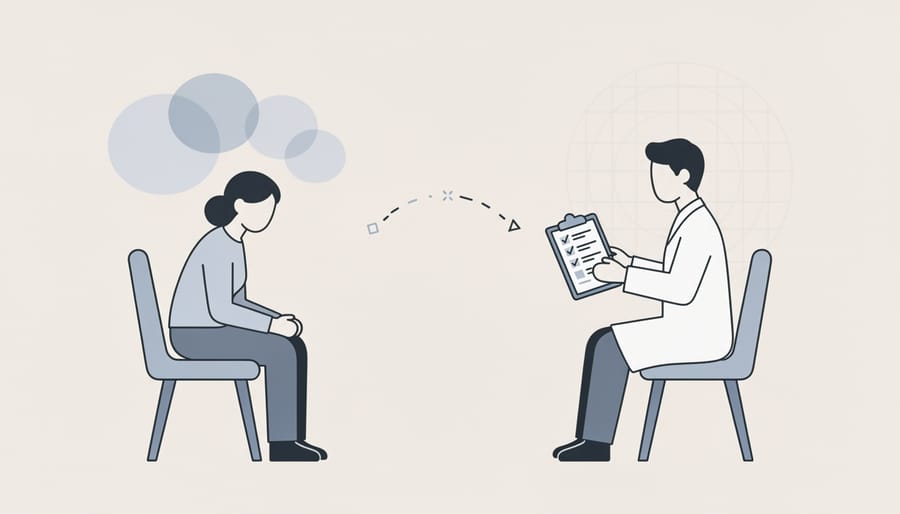
During a clinical assessment for generalized anxiety disorder, a healthcare professional conducts a structured evaluation to determine whether your symptoms meet established diagnostic criteria. The clinician will ask detailed questions about your worry patterns, what you worry about, how often the worry occurs, and whether it’s present more days than not over at least six months. They’ll assess whether your anxiety focuses on multiple everyday situations rather than a single specific concern.
The evaluation explores how difficult you find it to control your worry and examines the impact on your daily functioning at home, work, or school. Your healthcare provider will also ask about accompanying symptoms like restlessness, fatigue, difficulty concentrating, muscle tension, or sleep disturbances. They’ll rule out other conditions that might explain your symptoms, including other anxiety disorders, depression, or medical problems.
Canadian clinical practice guidelines emphasize that diagnosis relies on clinical criteria rather than laboratory tests. The assessment is collaborative: your honest description of what you’re experiencing provides the foundation for an accurate diagnosis. Healthcare professionals trained in mental health use their clinical judgment alongside these standardized criteria to determine whether GAD is present and how severely it’s affecting your life.
Screening Tools Used in Canada
Two standardized questionnaires play an important supporting role in assessing generalized anxiety disorder in Canada: the GAD-7 (Generalized Anxiety Disorder-7) and the PHQ-9 (Patient Health Questionnaire-9). These brief screening tools help healthcare providers gather structured information about your symptoms and their severity.
The GAD-7 and PHQ-9 questionnaires ask you to rate how often certain symptoms have bothered you over the past two weeks. The GAD-7 focuses specifically on anxiety symptoms like excessive worry, restlessness, and difficulty relaxing. The PHQ-9 screens for depression, which often occurs alongside GAD. Each uses a simple scale that assigns a numerical score based on your responses.
It’s important to understand that these questionnaires don’t diagnose GAD on their own. They’re screening tools that help clinicians identify symptoms and track changes over time, not replacements for a comprehensive clinical assessment. A healthcare professional interprets your scores alongside other information, your medical history, and a conversation about how symptoms affect your daily life.
You might complete these questionnaires at your family doctor’s office, a mental health clinic, or even online before an appointment. The scores provide a starting point for discussion, helping your provider understand the severity of your symptoms and decide whether further evaluation or treatment is needed.
When and How GAD Is Treated
Behavioral and Psychotherapy Approaches
Psychotherapy offers some of the most effective tools for managing GAD, helping you develop practical skills to interrupt worry cycles and regain control over anxious thoughts. These approaches work by changing how you relate to worry rather than simply trying to suppress it.
Cognitive-behavioral therapy (CBT) stands as the most researched and recommended psychological treatment for GAD. CBT helps you identify the thought patterns that fuel excessive worry, like assuming the worst will happen or overestimating danger, and teaches you to challenge and reframe them. You’ll learn to distinguish between productive problem-solving and unproductive rumination, then practice redirecting your mental energy toward what you can actually control.
Exposure-based techniques, often integrated into CBT, help you gradually face situations you’ve been avoiding due to anxiety. Rather than running from uncertainty, you learn to tolerate it in small, manageable doses. This process retrains your brain’s threat response, reducing the overwhelming fear that everyday situations trigger.
Relaxation training and mindfulness practices complement these approaches by teaching you to calm your body’s physical anxiety response. You’ll develop techniques like progressive muscle relaxation, controlled breathing, and present-moment awareness that interrupt the worry cycle before it spirals.
Many therapists combine elements from different approaches to match your specific needs. The key is consistent practice, therapy gives you new skills, but you build resilience by using them in daily life. Most people notice meaningful improvement within several months of regular sessions.
Medication and Combined Treatment
Medication plays an important role in GAD treatment, particularly when symptoms significantly interfere with daily life. Healthcare providers in Canada may prescribe antidepressants such as selective serotonin reuptake inhibitors (SSRIs) or serotonin-norepinephrine reuptake inhibitors (SNRIs) as first-line pharmacotherapy options. These medications help regulate brain chemistry over time, typically requiring several weeks to show full effect. Benzodiazepines may be used short-term for acute anxiety relief, though they’re generally not recommended for long-term management due to dependence risks.
Combined treatment, pairing medication with psychotherapy, often delivers the strongest outcomes. This approach addresses both the biological and psychological aspects of GAD, helping you manage worry patterns while also stabilizing the underlying anxiety response. Research supporting Canadian clinical practice guidelines shows that combining pharmacotherapy with behavioral interventions can reduce symptoms more effectively than either approach alone, and may help prevent relapse after treatment ends.
Your healthcare provider will tailor recommendations based on symptom severity, treatment history, and personal preferences. Some people start with therapy alone, add medication if needed, then gradually reduce it once they’ve developed strong coping skills. Others begin with both approaches simultaneously for faster relief.
If standard treatments haven’t provided adequate relief, emerging options like TMS for anxiety may be worth discussing with your doctor. The key is to get help from a qualified professional who can guide you toward the most appropriate combination for your situation.
Frequently Asked Questions About GAD
Generalized anxiety disorder raises questions for anyone seeking to understand their own worries or support someone close to them. The difference between GAD and normal anxiety lies in the persistence and intensity of the worry. Everyone experiences anxiety about daily challenges, but when excessive worry about everyday situations happens more days than not for at least six months and interferes with activities at home, work, or school, it moves beyond normal stress. GAD creates a constant feeling of being overwhelmed that doesn’t ease when a particular problem resolves.
How long does generalized anxiety disorder last?
GAD is diagnosed when excessive anxiety and worry are present more days than not for at least six months. Without treatment, it can persist for years, though the intensity may fluctuate over time.
Can GAD go away on its own?
While anxiety levels may naturally rise and fall, GAD typically requires professional treatment to resolve. Behavioral interventions, psychotherapy, pharmacotherapy, or a combination are effective approaches rather than waiting for symptoms to disappear.
Who is at risk for developing GAD?
Risk factors include a family history of anxiety disorders, ongoing life stressors, and certain personality traits. Women are diagnosed with GAD more frequently than men, though the condition affects people across all demographics.
When should I seek help for anxiety?
Seek professional support when worry interferes with daily functioning, prevents you from engaging in activities you value, or causes significant distress. Early intervention leads to better outcomes and prevents the worry cycle from becoming more entrenched.
If you’re uncertain whether your anxiety warrants professional attention, screening tools like the GAD-7 questionnaire can provide initial guidance, though only a qualified healthcare provider can offer a proper diagnosis based on clinical criteria. In crisis situations where anxiety is accompanied by thoughts of self-harm, the Mental Health Act provides frameworks for immediate support and intervention.
For those supporting someone with GAD, remember to take care of yourself as well. Helping a loved one manage persistent anxiety requires emotional energy, and your own wellbeing matters in that process. Professional treatment gives people with GAD practical tools to manage excessive worry, reduce the constant feeling of being overwhelmed, and reclaim their daily lives.
Understanding what generalized anxiety disorder is marks an important first step toward getting the support you need. GAD is a recognized mental health condition with clear diagnostic criteria, and it’s one that responds well to treatment. If you’ve been feeling overwhelmed by constant worry about everyday situations, experiencing physical symptoms that interfere with your daily life, or finding it hard to manage anxious thoughts more days than not, know that you’re not alone, and that effective help is available.
Canadian clinical practice guidelines, developed through a rigorous consensus process by experts in anxiety disorders, provide evidence-backed pathways for diagnosis and treatment. Whether through behavioral interventions, psychotherapy, medication, or a combination of approaches, GAD can be managed successfully. The persistent worry and fear you’re experiencing don’t have to define your future.
Reaching out to a healthcare professional is a sign of strength, not weakness. They can conduct a clinical assessment, help you understand what you’re experiencing, and work with you to develop a treatment plan tailored to your needs. Recovery is possible, and taking that first step toward professional support can make all the difference in reclaiming your daily life from excessive anxiety.