
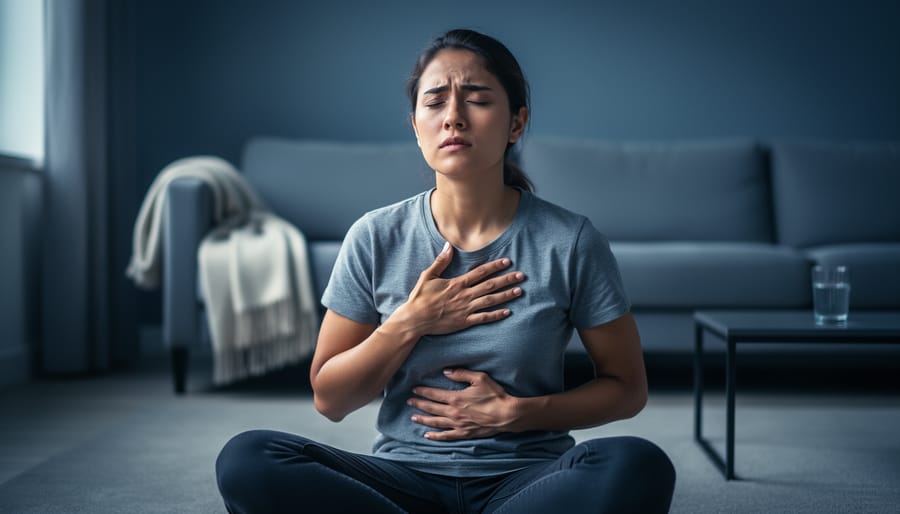
When an anxiety attack hits, three immediate techniques can help you regain control: slow your breathing with a 4-7-8 pattern (inhale for 4 counts, hold for 7, exhale for 8), ground yourself using the 5-4-3-2-1 method (name 5 things you see, 4 you can touch, 3 you hear, 2 you smell, 1 you taste), and remember the three Bs: breathe, believe (that the attack will pass), and be calm with yourself.
These aren’t just well-meaning suggestions. They work because they interrupt the panic cycle that feeds anxiety attacks. When your body floods with adrenaline and your thoughts spiral, these strategies give your nervous system something concrete to focus on instead of the fear itself.
If you’re reading this while experiencing an anxiety attack, you’re already taking the right step by seeking help. These episodes are deeply uncomfortable, but they’re not dangerous, and they always end. What you need right now are tools that work in the moment, not theories about why anxiety happens.
This guide offers evidence-based techniques that mental health professionals across Canada recommend for managing anxiety attacks as they unfold. You’ll find step-by-step instructions for breathing exercises, grounding techniques, and muscle relaxation methods that you can use immediately. We’ll also walk you through creating a personalized safety plan so you feel more prepared if another attack occurs.
The strategies here draw on mindfulness practices and cognitive-behavioral approaches that help thousands of Canadians manage anxiety attacks effectively. Some techniques will resonate more than others, that’s completely normal. The goal is to build your own toolkit of methods that feel right for you, so you’re not left feeling helpless when anxiety strikes.
What You Need to Manage Anxiety Attacks
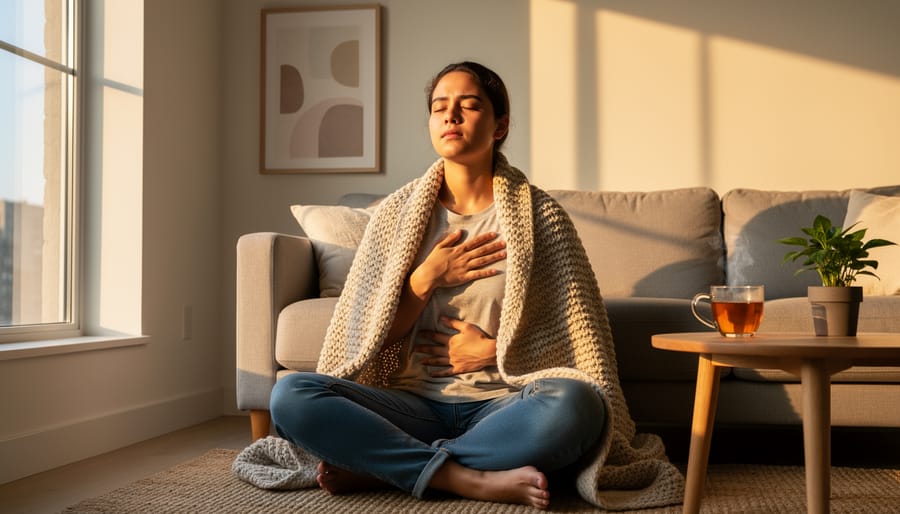
Managing anxiety attacks effectively starts long before you feel the first wave of panic. The most powerful tool you have is preparation, and that means gathering your resources when your mind is calm and clear, not in the middle of a crisis.
Think of this process like preparing an emergency kit. You wouldn’t wait until a storm hits to gather supplies. The same principle applies here. When anxiety strikes, your brain shifts into survival mode, making it nearly impossible to learn new techniques or remember complex instructions. That’s why building your toolkit now matters so much.
Your preparation doesn’t require expensive equipment or specialized training. Instead, focus on these essential elements:
- A quiet space you can retreat to, even if it’s just a bathroom or your parked car
- Grounding objects like a smooth stone, stress ball, or textured fabric to engage your senses
- Awareness of your body’s early warning signals, tight chest, racing thoughts, or shallow breathing
- Contact information for trusted support people who understand your experience
- A written safety plan listing your coping strategies and the situations that typically trigger your anxiety
Understanding your personal anxiety patterns makes a real difference. Pay attention during calm moments to what your body does when stress begins building. Does your jaw clench? Do your hands get cold? These signals become your early alert system, giving you precious time to use your techniques before panic takes hold.
The mental preparation matters just as much as the physical. Familiarize yourself with calming techniques like slow breathing and grounding exercises while you’re relaxed. Practice them repeatedly until they become second nature. When anxiety hits, muscle memory kicks in, and you’ll already know what to do. This preparation transforms panic from an overwhelming force into something you can actively manage.
Important Safety Considerations
Before practicing self-help techniques, understand when they’re appropriate and when professional support is essential. While mindfulness, grounding, and breathing strategies can be powerful tools, they complement rather than replace medical guidance.
The terms “anxiety attack” and “panic attack” are often used interchangeably, though DSM diagnostic distinctions exist. More importantly, understanding when to seek help can be lifesaving. If you experience chest pain, difficulty breathing that persists despite techniques, numbness spreading through your limbs, or symptoms you’ve never experienced before, these warrant immediate medical evaluation.
If you take medication for anxiety, depression, or other conditions, discuss these techniques with your healthcare provider. Some breathing exercises can interact with certain medications or conditions. Similarly, if you’re in therapy or considering it, panic attack help from a mental health professional ensures techniques integrate with your overall treatment plan.
The strategies in this article work best as part of a broader approach that includes professional support. Think of them as tools in your wellness toolkit, not replacements for diagnosis, therapy, or prescribed treatment. Panic attack first aid helps manage symptoms in the moment, but addressing underlying patterns requires collaboration with qualified healthcare providers who understand your complete health picture.
The Three Bs: Your Quick-Response Strategy
When anxiety surges and your mind races, complex coping strategies become nearly impossible to follow. That’s why the “three Bs” framework works so effectively during high-stress moments. This simple, memorable approach gives you a clear pathway through overwhelming feelings without requiring you to recall detailed instructions or make complicated decisions when your capacity for both is severely limited.
The first B stands for Breathe. When anxiety strikes, your breathing becomes shallow and rapid, which signals danger to your nervous system and intensifies the attack. Deliberately slowing your breath interrupts this cycle. Focus on breathing in slowly through your nose for a count of four, holding for two counts, then exhaling through your mouth for six counts. The exhale matters most because it activates your body’s relaxation response. You don’t need perfect technique. Simply making your breaths slower and deeper helps your body self-regulate and return to balance.
The second B is Be present. Anxiety pulls your mind toward catastrophic futures that haven’t happened. Grounding yourself in the current moment through sensory awareness counters this spiral. Notice five things you can see around you, four things you can touch, three sounds you can hear, two things you can smell, and one thing you can taste. This simple practice redirects your attention from frightening thoughts to concrete, neutral reality.
The final B means Be realistic. Anxiety distorts thinking, making you overestimate danger and catastrophize outcomes. Challenge these thoughts by asking yourself: “What evidence supports this fear? What’s actually happening right now versus what I’m imagining might happen?” This isn’t about forcing positive thinking but about questioning whether your anxious predictions reflect reality. For those managing chronic anxiety practicing this realistic thinking during calmer moments makes it more accessible during attacks.
Step-by-Step: How to Stop an Anxiety Attack
Breathing Techniques That Calm Your Nervous System
Your breathing pattern shifts dramatically during an anxiety attack. Rapid, shallow breaths from your chest trick your body into staying in alarm mode. Switching to deliberate, measured breathing signals your nervous system that you’re safe. Slow breathing helps calm your physical response and gives your mind something concrete to focus on instead of spiraling thoughts.
Try the 4-7-8 pattern: breathe in through your nose for four counts, hold for seven, exhale through your mouth for eight. The extended exhale activates your body’s relaxation response. If counting feels too complex during peak anxiety, simplify to equal counts of four in, four out.
Place one hand on your chest and one on your belly. As you inhale, your stomach should push out while your chest stays relatively still. This diaphragmatic breathing engages the vagus nerve, which helps regulate your stress response. If you’re breathing correctly, the hand on your belly moves more than the one on your chest.
The beauty of breath work is its dual function. It physiologically calms your racing heart and gives your scattered attention a single point of focus, interrupting the feedback loop between anxious thoughts and physical symptoms.
Grounding Exercises for Sensory Awareness
Grounding exercises work by pulling your attention away from spiraling thoughts and into your immediate physical experience. When anxiety floods your system, your mind races into the future or fixates on perceived threats. Anchoring yourself in what you can see, hear, and touch right now interrupts that cycle and reminds your nervous system that you are safe in this moment.
The 5-4-3-2-1 technique is one of the most effective grounding tools because it gives your mind a concrete task. Start by naming five things you can see around you: the texture of a wall, a book on a shelf, the color of your shirt. Then identify four things you can physically touch, three things you can hear, two things you can smell, and one thing you can taste. Move through each sense deliberately, taking your time. This methodical inventory of your surroundings forces your brain to engage with the present rather than the catastrophic scenarios it is constructing.
Other sensory grounding exercises include holding an ice cube and noticing how it feels as it melts, pressing your feet firmly into the floor and feeling that solid contact, or running your hand under cold water while focusing on the temperature change. These practices work because anxiety lives in your thoughts, but physical sensations exist only in the now.
Challenging Catastrophic Thinking
During an anxiety attack, your mind gravitates toward worst-case scenarios. “I’m going to pass out in public” or “This feeling will never end” can feel absolutely true in the moment. Realistic thinking helps you pause and question these catastrophic predictions.
Start by naming the thought. Instead of letting “I can’t breathe, I’m dying” run unchecked, identify it: “I’m having the thought that I’m dying.” This small distance creates space to examine whether it’s actually true. Ask yourself: What evidence supports this? What evidence contradicts it? Your racing heart feels scary, but you’ve survived every anxiety attack before this one.
Challenge the probability. When you think “Everyone will see me panic and think I’m crazy,” ask: Has this actually happened before? Even if someone notices, what’s the realistic outcome? Most people are focused on themselves, and visible anxiety rarely has the social consequences your mind predicts during an attack.
Reframe the threat. Instead of “Something is terribly wrong with me,” try “My body is responding to perceived danger, even though I’m actually safe right now.” Replace “This will never stop” with “Anxiety attacks are temporary. This will pass like it always does.”
These techniques take practice. During calm moments, write down your common catastrophic thoughts and realistic responses. When an attack hits, you’ll have a mental script ready to challenge the spiral.
Building Your Personal Safety Plan
Creating a safety plan now, when you’re calm, gives you a roadmap for navigating future anxiety attacks with confidence. This preparation transforms overwhelming moments into manageable situations because you’ve already decided what to do. Think of it as building a toolkit before you need it, so you’re not scrambling to figure things out during a crisis.
The foundation of your safety plan starts with awareness. Make a list of all the places where you’ve experienced anxiety attacks or avoid going because you fear having one. Be specific, don’t just write “crowded places.” Instead, note “the grocery store on Saturday mornings” or “the conference room during team meetings.” This specificity helps you identify patterns and triggers you might otherwise miss.
Once you have your list, transform it into a graduated exposure plan:
- Write down each place or situation where panic attacks occur or you fear they might happen.
- Rate each location’s stress level on a scale from 1 to 10, with 10 being the most anxiety-inducing.
- Order your list from least to most stressful, creating a ladder of challenges.
- Develop specific coping strategies for each situation, which breathing technique works best in your car versus at your desk, what grounding object you’ll keep in your purse for the coffee shop.
- Practice your chosen techniques first in low-stress situations where you feel safe and in control.
- Gradually face feared situations, starting with items at the bottom of your ladder and working upward as you build confidence.
This stepwise approach reduces the fear of future attacks because you’re no longer avoiding situations, you’re preparing for them. You might discover that the mall food court rates a 4 when you go on a Tuesday afternoon but an 8 on weekend evenings, which gives you actionable information for planning outings.
Include in your written plan which techniques from your toolbox, calm breathing, muscle relaxation, realistic thinking, grounding exercises, work best for you in different settings. Some people find the 5-4-3-2-1 grounding technique perfect for public spaces, while others prefer focusing on breath counts in private moments. There’s no single right answer; your plan should reflect what genuinely helps you.
Review and update your safety plan regularly. As you successfully navigate situations that once felt impossible, you’ll build evidence that contradicts the catastrophic predictions anxiety whispers. That evidence becomes your greatest tool for reducing future panic.
How to Know Your Techniques Are Working

Knowing when your anxiety management techniques are working helps you trust the process and stay committed to practicing them. You’ll notice several clear physical signs that your nervous system is calming down: your breathing becomes slower and steadier, your heart rate decreases, and the tension in your jaw, shoulders, and chest starts to ease. Your hands may feel warmer as circulation normalizes, and that tightness in your stomach begins to release.
Beyond physical changes, you’ll experience mental shifts too. The racing thoughts that felt overwhelming start to slow, and you regain the ability to focus on your surroundings rather than staying trapped in anxious predictions. You might find yourself able to respond to someone speaking to you or notice details in the room that your panicked mind couldn’t process moments earlier. This return of mental clarity signals that you’re regaining control.
Realistic timelines matter. Most anxiety management techniques take 5 to 15 minutes to produce noticeable effects, not seconds. If your first attempt doesn’t bring immediate relief, that’s normal. Return to your breathing, try a different grounding exercise, or combine techniques like slow breathing with muscle relaxation. The goal isn’t instant elimination of anxiety but gradual reduction in intensity and duration.
Progress isn’t always linear. Some attacks respond quickly while others take longer, and that variation doesn’t mean you’re doing something wrong. What matters is building a toolkit through repeated practice during calm moments, so these techniques become second nature when you need them most.
Next Steps: Building Long-Term Resilience
Successfully managing an anxiety attack is an important milestone, but lasting change comes from building resilience between episodes. The techniques you practice during calm moments become stronger tools when you need them most.
Professional support makes a significant difference in long-term outcomes. Cognitive-behavioral therapy (CBT) helps you identify thought patterns that fuel anxiety and develop healthier responses. Many Canadians find that working with a therapist provides structure, accountability, and personalized strategies tailored to their specific triggers. If you’re unsure where to start, learning how to access mental health support in Canada can point you toward covered services and community resources.
Medication may be appropriate for some people, particularly when anxiety significantly impacts daily functioning. Discuss options with your doctor, who can explain potential benefits, side effects, and how medication might work alongside therapy and self-help techniques. Treatment isn’t one-size-fits-all.
Between professional appointments, daily practices strengthen your nervous system’s ability to self-regulate. Regular mindfulness exercises that focus on sensory awareness promote overall well-being and reduce baseline anxiety. Even five minutes of grounding work each morning builds the neural pathways that help during crisis moments.
Keep your safety plan current. As you gain confidence, revisit your list of challenging situations and adjust strategies based on what works. Some places that once triggered panic may become easier over time.
Recovery isn’t linear. You’ll have setbacks, and that’s normal. Each time you use your tools, you reinforce your ability to cope. Managing anxiety is an ongoing practice, not a problem you solve once and forget.
Common Questions About Managing Anxiety Attacks
How long does an anxiety attack typically last?
Most anxiety attacks peak within 10 minutes and usually subside within 20-30 minutes, though the lingering effects can last longer. The intensity varies from person to person, and practicing calming techniques can help shorten the duration over time.
Can breathing exercises make my anxiety worse?
For most people, slow, deep breathing helps calm the nervous system, but some individuals feel more anxious focusing on their breath initially. If this happens, try grounding techniques like the 5-4-3-2-1 method instead, and gradually work up to breathing exercises when you feel more comfortable.
What if the techniques don’t work right away?
These strategies often take practice to become effective, and results aren’t always immediate during your first few attempts. Keep trying different combinations, what works varies by person and situation, and remember that even small improvements in managing your response represent progress.
When should I see a doctor about my anxiety attacks?
Seek professional help if anxiety attacks happen frequently, interfere with your daily life, or if you’re avoiding places and activities because you fear having an attack. A healthcare provider can determine whether you’re dealing with generalized anxiety disorder or another condition that requires specific treatment.
Understanding these common concerns helps you set realistic expectations as you develop your anxiety management skills. Many people worry they’re doing something wrong when techniques don’t provide instant relief, but building this skillset takes time and repetition. The three Bs strategy and other mindfulness practices become more natural and effective with consistent use, even during calm moments when you’re not experiencing an attack.
You might also wonder whether combining multiple techniques is helpful or overwhelming. The answer depends on what you find manageable in the moment. Some people benefit from layering approaches, starting with breathing, then adding grounding, then challenging catastrophic thoughts, while others prefer focusing on one technique at a time. Your safety plan can include notes about which combinations work best for you in different situations.
Can anxiety attacks be prevented completely? While you can’t eliminate all possibility of future attacks, preparation significantly reduces their frequency and intensity. Making a list of places where you fear having panic attacks and developing specific strategies for each situation builds confidence and lessens the power anxiety holds over your life. Many people find that facing feared situations gradually, armed with their practiced techniques, transforms their relationship with anxiety from helpless victim to capable manager.
Anxiety attacks are manageable when you have the right tools and know how to use them. The techniques you’ve learned here aren’t just theoretical, they’re practical strategies that hundreds of thousands of people use successfully to regain control during overwhelming moments. The three Bs framework, breathing exercises, grounding techniques, and realistic thinking all work because they target your body’s actual stress response, helping you shift from panic to calm.
What matters most is preparation and practice. Creating your personal safety plan during calm moments gives you a roadmap to follow when anxiety strikes. Each time you practice these techniques, you’re building new neural pathways that make the response more automatic and effective. You’re not starting from scratch every time, you’re getting stronger with each experience.
Taking that first step might feel daunting, but remember that seeking professional support is a sign of strength, not weakness. Therapists, counselors, and doctors have specialized training to help you develop personalized strategies that address your specific triggers and patterns. They can work alongside the stress management techniques you use on your own, creating a comprehensive approach to long-term resilience.
Your experience with anxiety attacks is valid, and you’re not alone in facing them. With the right preparation, support, and practice, you can develop confidence in your ability to manage these moments and move forward with your life.