

Students spend an average of 12 to 16 hours per week on coursework outside class, juggle part-time jobs, navigate social pressures, and often manage living situations with little privacy or predictability. That workload generates real, measurable stress, and left unchecked, it impairs memory, disrupts sleep, and erodes academic performance. The good news: stress management is a learnable skill set, not an inherent trait, and the techniques that work don’t require expensive equipment, hours of free time, or a quiet apartment.
Evidence from Canadian universities shows that students who practice even one stress-reduction technique consistently report improved focus, better sleep quality, and higher course satisfaction. The barrier isn’t complexity. Most students simply don’t know which techniques work reliably or how to fit them into a packed schedule. You don’t need an hour of meditation or a therapist’s office to see results. What matters is choosing strategies that match your available time, your living situation, and your stress triggers, then using them before pressure builds to a breaking point.
This guide walks through eight techniques that meet the realities of student life: limited budgets, shared spaces, unpredictable schedules, and the need for quick relief. Each method includes clear steps, timing estimates, and adjustments for common obstacles like noisy roommates or back-to-back classes. You’ll also learn when self-management isn’t enough and how to access campus or community support without delay.
What You’ll Need to Get Started
Good news: managing student stress doesn’t require expensive equipment or a complete life overhaul. Most effective techniques use what you already have or can access for free through your school.
Here’s what you’ll need to practice the stress management techniques in this guide:
Physical Items
– A quiet space where you can sit comfortably for 5-10 minutes (dorm room, library study carrel, empty classroom)
– A notebook or journal for tracking stressors and planning (digital notes work too)
– Comfortable clothing that allows full range of movement
Time Requirements
– 5-15 minutes daily for core practices like breathing exercises or mindfulness
– 15-30 minutes 2-3 times weekly for physical activity
– One 30-minute planning session weekly to organize assignments and commitments
Digital Tools (Optional but Helpful)
– Calendar app (Google Calendar, Apple Calendar, or your school’s learning management system)
– Free meditation or breathing apps like Calm, Headspace (many offer student discounts), or Insight Timer
– Sleep tracking features on your phone to monitor rest patterns
Support Resources
– Contact information for your campus counseling center
– At least one trusted person you can talk to (friend, family member, residence advisor)
– Access to student health services (most Canadian universities include this in tuition)
The beauty of evidence-based stress management is that it prioritizes simple, accessible practices over expensive programs or equipment. A student living in a shared dorm room with a tight budget can practice these techniques just as effectively as someone with a private apartment and disposable income. Your most important resource isn’t something you buy, it’s your commitment to practicing these skills consistently, even when you don’t feel immediate results.
Before You Begin: Important Considerations

Stress management techniques work well for everyday academic pressure, but there are times when self-help strategies aren’t enough. If you’re experiencing persistent symptoms that last more than two weeks, thoughts of self-harm, panic attacks that interfere with daily life, or an inability to attend classes or complete basic tasks, it’s time to get mental health help from a professional. These signs indicate you need more support than stress management alone can provide.
Many students deal with both anxiety and depression alongside academic stress, and these conditions require professional treatment, not just stress management techniques. Campus counseling services are free or low-cost for students and can provide assessments, short-term therapy, and referrals to longer-term care if needed. Most Canadian universities and colleges offer confidential mental health support through student services.
You don’t need to wait until you’re in crisis to seek help. Early intervention makes treatment more effective. If stress is affecting your grades, relationships, physical health, or daily functioning, reach out to a campus counselor or your provincial health services. They can help you understand whether you’re dealing with manageable stress or a mental health condition that needs treatment. For students concerned about involuntary treatment, understanding your CTO rights can provide clarity, though community treatment orders are rare and apply only in specific circumstances.
The techniques in this article complement professional treatment but don’t replace it when clinical intervention is necessary.
8 Essential Stress Management Techniques for Students
Technique 1: Deep Breathing for Immediate Calm
Deep breathing activates your parasympathetic nervous system, which directly counters the stress response. When anxiety hits during an exam or before a presentation, this technique gives you a physical reset in under a minute.
Try the 4-7-8 method first. Sit with your back supported and feet flat on the floor. Place one hand on your chest and the other on your belly. Breathe in through your nose for four counts, hold for seven counts, then exhale slowly through your mouth for eight counts. The extended exhale is what triggers the calming effect, research shows 4-7-8 breathing lowers stress markers within minutes.
Start with three cycles. You can do this anywhere: at your desk before studying, in the library when you feel overwhelmed, or in your dorm room before bed. Your belly should rise more than your chest, that’s how you know you’re breathing deeply enough.
Technique 2: Time Management and Prioritization
Chaotic schedules fuel student stress more than most people realize. When everything feels urgent, you shut down or spin your wheels instead of making progress.
Start by writing down every commitment for the week, classes, assignments, work shifts, study time. Seeing it all on paper stops the mental overwhelm of trying to remember everything. Use whatever works: a paper planner, Google Calendar, or a student-focused app like MyStudyLife.
Next, apply the Eisenhower matrix to your academic tasks. Draw four boxes: urgent-important (do now), important-not urgent (schedule), urgent-not important (delegate or minimize), not urgent-not important (eliminate). That essay due Friday goes in box one. Reading for next month’s midterm goes in box two. Group chat drama? Box four.
Break large assignments into 30-minute chunks with specific actions. Instead of “work on research paper,” write “find three sources” or “write introduction paragraph.” Small tasks feel manageable and create momentum.
Plan your hardest work for when your brain works best, morning person or night owl, honor it rather than fight it.
Technique 3: Movement and Physical Activity

You don’t need a gym membership or an hour-long workout to reduce stress through movement. Physical activity reduces student stress by releasing endorphins and breaking the cycle of anxious thoughts, and brief bursts work remarkably well.
Walk to class instead of taking the shuttle, even if it adds ten minutes to your commute. Take the stairs between lecture halls. During study sessions, set a timer for every 50 minutes and do five minutes of movement, jumping jacks, a quick walk around your floor, or stretching by your desk. These micro-breaks improve focus when you return to studying.
If you have 20-30 minutes between classes, use that gap for a brisk walk around campus rather than scrolling on your phone. Many students find that moving their bodies before an exam calms pre-test jitters better than cramming does. On weekends, try a free campus yoga class, join an intramural sport, or explore walking trails near your school.
The key is consistency over intensity. Three ten-minute walks spread across your day deliver stress relief without requiring you to change clothes or shower afterward.
Technique 4: Sleep Hygiene Practices
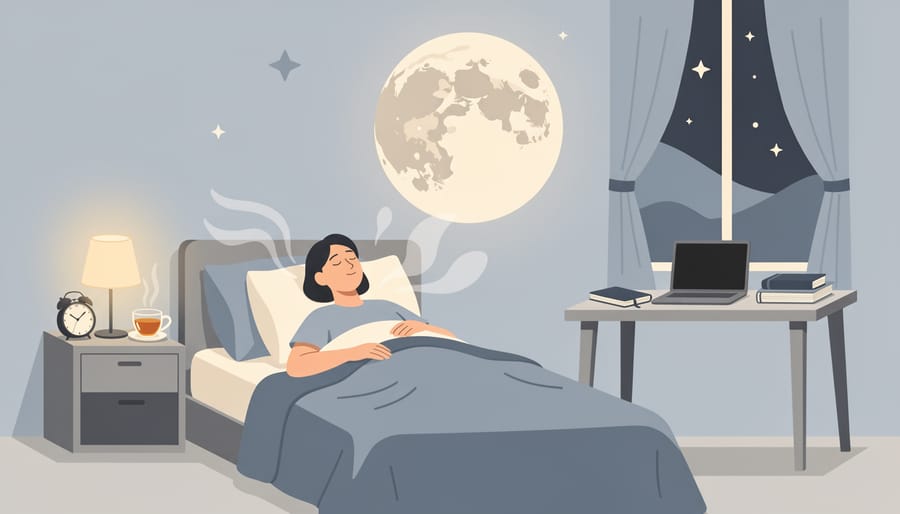
Most students know sleep matters but don’t realize how much poor sleep multiplies stress. When you’re running on six hours or less, your brain’s stress response system goes into overdrive, making everything feel harder than it actually is.
Start with consistency. Pick a realistic bedtime you can maintain even on weekends, maybe 11:30 PM instead of the mythical 10:00 PM that never happens. Set an alarm for 30 minutes before to start winding down. Your body craves predictability more than perfection.
Transform your sleep space within dorm constraints. Use a sleep mask and earplugs if roommates keep different hours. Keep your phone across the room, not beside your pillow, checking it at 2 AM disrupts the sleep cycle you’ve worked to build. If possible, study somewhere other than your bed so your brain associates the bed solely with sleep.
The 10-3-2-1-0 rule works for student schedules: no caffeine 10 hours before bed, no food or alcohol 3 hours before, no work 2 hours before, no screens 1 hour before, zero times hitting snooze. You won’t nail all five immediately, but pick two to start.
Technique 5: Mindfulness and Grounding Exercises
Mindfulness brings your attention to the present moment, interrupting the stress spiral of worrying about upcoming exams or replaying social mistakes. Students can practice these techniques anywhere, in under five minutes, without special equipment.
The 5-4-3-2-1 grounding technique works particularly well during anxiety spikes. Wherever you are, identify five things you can see (your textbook, a tree outside, your water bottle). Then four things you can physically touch (your jeans, the desk surface, your hair). Next, three things you can hear (distant voices, traffic, your breathing). Two things you can smell (coffee, fresh air, even just “nothing specific”). Finally, one thing you can taste (mint from gum, coffee residue, or your own mouth).
Between classes, try a two-minute body scan: mentally move your attention from your head down to your toes, noticing tension without judging it. In your dorm, simply focus on your breath for three minutes. When your mind wanders to your essay deadline, acknowledge the thought and return to breathing. That’s the practice.
Technique 6: Building and Using Your Support Network
Students often hesitate to reach out when stressed because they don’t want to burden others or appear weak. Research shows that social connection actively reduces cortisol levels and helps process difficult emotions.
Start by mapping your existing relationships: roommates who check in on you, classmates who share similar struggles, family members who listen without fixing, friends from home who know your history. Write down three people you could genuinely talk to about stress.
Practice reaching out with specific, manageable requests. Instead of “I’m so stressed,” try “I’m worried about my midterm, can we study together Thursday?” or “I need to vent for ten minutes, are you free?”
If vulnerability feels difficult, start small. Share one stressor with one trusted person this week. Notice that most people want to help and appreciate being trusted with your honesty.
Many campuses offer peer support programs where trained students provide listening and resource navigation, sometimes easier than starting with friends.
Technique 7: Setting Boundaries and Saying No
Learning to decline requests protects your time and mental health, even when it feels uncomfortable. Students often overcommit because they fear disappointing others or missing opportunities, but saying yes to everything means saying no to your wellbeing and academic success.
Start with the direct approach: “I can’t take that on right now, but thanks for thinking of me.” You don’t owe anyone a detailed explanation. If you want to soften it, try “I’m focusing on my coursework this week” or “I’ve already committed my study time.”
For recurring obligations that drain you, have a conversation rather than ghosting. “I need to step back from the committee this semester to focus on my courses” gives clear information without apology.
Practice saying no to low-stakes requests first, declining to go out when you need sleep, or turning down extra shifts during midterms. The discomfort fades with repetition. Remember that protecting your study time isn’t selfish; it’s necessary. People who respect your boundaries will understand, and those who don’t weren’t supporting your success anyway.
Technique 8: Progressive Muscle Relaxation
Progressive muscle relaxation (PMR) helps release the physical tension that builds up during long study sessions or stressful situations. This technique works by deliberately tensing and then releasing specific muscle groups, teaching your body to recognize and let go of stress-related tightness.
Find a comfortable seated or lying position where you won’t be disturbed for 10-15 minutes. Starting with your feet, curl your toes tightly for 5 seconds, then release completely for 10 seconds, noticing the difference between tension and relaxation. Move up to your calves by pointing your toes toward your head, hold, then release. Continue this pattern through your thighs, buttocks, stomach, hands (make fists), arms, shoulders (shrug toward ears), and face (scrunch facial muscles).
The key is the contrast between tension and release. Don’t tense so hard it hurts, breathe normally throughout, and spend twice as long relaxing as tensing. Many students find PMR particularly helpful before bed or after sitting through long lectures when their shoulders and neck feel knotted.
How to Know If It’s Working
Stress management isn’t like taking a pill where you feel better in an hour. You’re building new skills, and that takes time. Most students notice small shifts within a week or two of consistent practice, but the real benefits compound over several weeks.
Pay attention to both how you feel and what’s actually happening in your life. Your body gives you clues before your brain catches up. You might sleep through the night without waking up three times, or realize you got through a tough exam without that familiar stomach knot. These small wins matter more than waiting for some dramatic transformation.
- Falling asleep faster and waking up feeling more rested
- Recovering more quickly from stressful situations instead of ruminating for hours
- Making it through the day without tension headaches or jaw clenching
- Feeling less irritable with roommates or friends over minor annoyances
- Actually concentrating during lectures instead of mentally spiraling about your to-do list
- Completing assignments without last-minute panic sessions
- Showing up to class consistently rather than avoiding when overwhelmed
Track your progress without turning it into another source of stress. A simple daily check-in works: rate your stress level from one to ten each evening, jot down which techniques you used, and note anything that felt different. After two weeks, patterns emerge. Maybe deep breathing doesn’t do much for you, but twenty minutes of walking between classes consistently drops your stress rating by two points.
If nothing’s shifting after three to four weeks of genuine effort, that’s information, not failure. Try a different technique from the list, adjust your approach, or increase the frequency. Some students need daily practice while others find benefit from three times weekly.
When stress keeps interfering with your ability to attend class, complete work, or maintain relationships despite consistent practice, that’s your signal to add professional support to your toolkit. The techniques in this article work alongside counseling or medical treatment, not instead of it. Building a routine that actually fits your life means staying flexible and honest about what helps.
Campus and Community Resources in Canada
Most Canadian post-secondary institutions provide free or low-cost mental health support specifically designed for student schedules and budgets. Your campus counseling center typically offers short-term individual therapy, group workshops on stress management and study skills, crisis intervention, and referrals to community resources when longer-term care is needed. Appointments can often be booked online, and many schools now offer virtual sessions that fit between classes.
To access campus support, start by visiting your student services website or wellness center in person. Most institutions don’t require a referral, you can self-refer by filling out an intake form or calling directly. Wait times vary by campus and season (expect longer waits during exam periods), but crisis support is usually available same-day.
Beyond your campus, provincial health services provide additional mental health support. Ontario students can access free virtual therapy through programs like Stepped Care 2.0, while BC students have access to Bounce Back and Here2Talk helplines. Quebec offers Tel-Jeunes for students under 25, and Alberta Health Services runs the Mental Health Help Line province-wide. If you need what works for support in your first language, many provinces offer multilingual crisis services and language support for anxiety in community health centers.
National resources available to all Canadian students include:
- Kids Help Phone (1-800-668-6868): Free 24/7 counseling for anyone under 25, including text and chat options
- Good2Talk (1-866-925-5454): Post-secondary student helpline operating evenings in Ontario and Nova Scotia
- Wellness Together Canada: Free online mental health resources, self-assessment tools, and connection to counselors
- Student-specific apps and platforms often subsidized through student unions or health plans
Many student health plans also cover off-campus psychologists or therapists if campus services have long wait times or limited session numbers. Check your coverage details through your student union website.
Common Questions About Student Stress Management
Students often hesitate to try stress management because they worry about time, privacy, or whether these techniques actually make a difference. Here are straightforward answers to the most common questions that come up:
How much time do these techniques actually take?
Most techniques take 5-15 minutes once you know how to do them. Deep breathing works in 2-3 minutes, and you can practice mindfulness while walking between classes. Start with whatever time you have rather than waiting for a perfect 30-minute window.
What if I don’t have privacy in a shared dorm room?
Many techniques work in public or shared spaces. You can practice deep breathing at your desk in the library, do progressive muscle relaxation under your blanket, or use headphones for guided meditation. Walking meditation and physical activity happen outside your room entirely.
Can stress management really improve my grades?
Better stress management typically leads to better sleep, sharper focus, and more efficient study sessions. When you’re less overwhelmed, you retain information more effectively and think more clearly during exams. The techniques won’t replace studying, but they help you get more from the time you put in.
What if I’ve tried these before and nothing worked?
Techniques often fail because of inconsistent practice, unrealistic expectations, or trying too many at once. Pick one or two methods, commit to trying them daily for two weeks, and adjust how you practice based on what feels right. What didn’t work at one point in your life might click now.
Do I need to do all eight techniques to see results?
Absolutely not. Using one or two techniques consistently beats trying all eight sporadically. Start with whichever technique addresses your biggest stress symptom, poor sleep, racing thoughts, physical tension, and add others only if you want to.
How do I know when stress management isn’t enough?
If stress interferes with your ability to attend classes, complete basic tasks, or maintain relationships for more than two weeks, or if you have thoughts of self-harm, that’s when professional support becomes necessary. Campus counseling services exist specifically for these situations.
The reality is that stress management looks different for everyone. A technique that transforms one student’s experience might feel awkward or unhelpful to you, and that’s completely normal. Your roommate might swear by meditation while you find physical activity more effective. Some students need structure and scheduled practice times; others prefer grabbing techniques as needed throughout the day.
Cost shouldn’t stop you either. Every technique in this article works without special equipment, apps, or memberships. A notebook costs a few dollars if you want to track your stress patterns, but even that’s optional.
If you’re feeling skeptical about whether any of this will help, try this: pick the technique that sounds least annoying, commit to testing it for one week, and notice whether anything shifts. You’re not looking for dramatic transformation, just small improvements in how you feel or function. That’s enough to build on.
Learning to manage stress as a student is a process, not a destination. The eight techniques in this guide work differently for different people, and that’s completely normal. You don’t need to master all of them at once. Start with one or two that resonate with you and build from there. Even small, consistent practices make a measurable difference over time.
What you’re experiencing as a student is valid. Academic pressure, financial worries, and the uncertainty of building your future create real stress. Managing it doesn’t mean eliminating it entirely. It means developing tools that help you respond rather than simply endure.
If you’ve tried these techniques and still feel overwhelmed, or if stress is seriously affecting your ability to eat, sleep, attend classes, or maintain relationships, reach out to your campus counseling centre or a mental health professional. There’s no threshold you have to cross before your stress “counts” as serious enough for support.
The skills you build now, whether it’s boundary-setting, mindfulness, or simply knowing when to ask for help, will serve you far beyond your student years. You’re not just surviving your degree. You’re learning how to take care of yourself through challenge, and that matters.